Cloud Security in 2026: Control, Compliance, and Continuity
In 2015, the tech world was convinced of a singular truth: the future lived in the Public Cloud. Keynote stages were filled with visions of a world where on-premises infrastructure was a relic of the past and US hyperscalers were the only destination.
Fast forward to 2026, and the landscape is unrecognisable. A perfect storm of geopolitical unpredictability, aggressive market consolidation, and a sobering realisation of the true costs of AI has forced a strategic pivot. For European enterprises, the question is no longer just how to move to the cloud, but where that cloud is legally and physically anchored — and how organisations can manage the growing AI security risk that comes with modern platforms.That’s where NetNordic’s approach can be beneficial: not just as a regional alternative, but as an operator of a highly available, scalable Secure Private Cloud platform designed for the realities of Nordic enterprises.
The Perfect Storm: Why the Public Cloud Assumption Failed
The shift away from total Public Cloud reliance is driven by three primary forces that no one fully envisioned a decade ago:
The geopolitical “unpredictability” factor: While eastern markets are often viewed as predictable in their long-term goals, the Western landscape has become a place of uncertainty. Trade wars, shifting tariffs, and political swings have made relying on US-based tech stacks a continuity risk for large Nordic entities.
The “bulldozer” effect in the vendor market: The acquisition of major players like VMware by Broadcom has sent shockwaves through the market. Significant licensing hikes and the discontinuation of partner programs have left many smaller vendors on the brink of exit. This turbulence means a vendor you trust today might not exist by April 2027.
Post-pandemic cost consciousness: The “growth at all costs” era of the 2010s has been replaced by strict fiscal discipline. Organisations are realising that the “pay-as-you-go” public cloud model often translates to “pay-more-than-you-planned,” particularly when data egress and specialised AI workloads are involved.
NetNordic: Building and Operating the Nordic Private Cloud
IIn this climate of uncertainty, NetNordic has emerged as a safe harbour for enterprises seeking stability without sacrificing innovation. But the value is not only where the platform is located – it’s how it is built and operated.
NetNordic provides what many enterprises are now actively searching for: a Nordic version of the cloud experience, delivered through a Private Cloud platform that is designed for high availability, scalability, and security, and operated with enterprise-grade discipline.
Total Data Sovereignty Engineered into the Platform
Unlike US clouds subject to foreign surveillance acts, NetNordic operations are anchored in EU regulations, ensuring that sensitive data – from patient records to government archives – stays under local jurisdiction.
But sovereignty is not just a legal checkbox. It becomes a platform design principle: keeping data local, controlling access paths, and ensuring that governance and compliance are built into how workloads are hosted and managed.
High Availability as a Core Operating Principle
In a world defined by uncertainty, uptime is not a feature – it’s a strategic requirement. NetNordic’s approach is built around continuity: ensuring enterprises have a stable platform for mission-critical workloads, where resilience and operational predictability matter as much as raw performance.
A “Select Few” Partnership That Enables Continuity
As a select partner engaged with Broadcom, NetNordic offers a level of stability and continuity that many smaller providers can no longer guarantee. In practical terms, this helps enterprises reduce vendor uncertainty and maintain a reliable home for long-term private cloud workloads – without being forced into rushed migrations or disruptive platform shifts.
Scalability on Your Terms Without Losing Control
The value proposition is a hybrid reality: the scalability of the cloud, but run on the business’s own conditions, not the client-vendor conditions of a foreign giant.
That means enterprises can scale capacity and services while still maintaining control over security posture, compliance requirements, and operational boundaries. This is especially critical in regulated Nordic industries.
The AI Reality Check: Governance Over Hype
While AI is the headline of every tech journal, the current market is characterised by a bubble of misunderstanding. The industry is currently in a governance gap where the excitement of innovation is colliding with the reality of regulation – and where infrastructure decisions suddenly have much higher stakes.
The European approach is fundamentally different from the US market. While the US model fosters rapid innovation through fewer restrictions, the EU prioritises structured, governed environments. For industries like healthcare, public cloud AI is often a non-starter due to strict data regulations.
A key reason is that AI introduces new attack surfaces. Beyond classic cybersecurity threats, enterprises now have to consider risks such as prompt hacking, where malicious input is used to manipulate AI behaviour, extract sensitive information, or bypass intended controls. Combined with the risk of AI data leakage, this makes governance and platform design more important than ever.
NetNordic addresses this by providing an AI-ready private cloud foundation where data can be ingested and analysed within a controlled, valid, and cost-transparent environment – without compromising the security, compliance, and operational reliability that enterprises require.
Politics is the “Where,”
AI is the “How”
When assessing what has changed the cloud landscape more, the answer is clear: politics has redefined the “Where,” while AI has redefined the “How.”
AI is a powerful tool – the “how” of future business – but companies should be wary of repeating the mistakes of 2015 by rushing into a cloud environment that doesn’t offer long-term safety. Politics is the driving force behind the infrastructure decisions of 2026.
At the same time, AI is changing the risk model. For enterprises, this is not only about compute power — it is about managing AI cybersecurity, ensuring traceability, and reducing the overall AI security risk in environments where compliance, auditability, and resilience are non-negotiable.
Businesses are now making active decisions to support EU and Nordic regional clouds, maintaining a clear pathway back and a plan for digital autonomy. And increasingly, they are also choosing providers not only based on location, but on operational capability: who can build, run, secure, and scale a private cloud platform that will still be reliable when the next disruption hits.
In a world where unpredictability is the greatest risk, a local car with a local service plan is far more valuable than a high-tech vehicle you can’t guarantee will be allowed on the road tomorrow.
Author
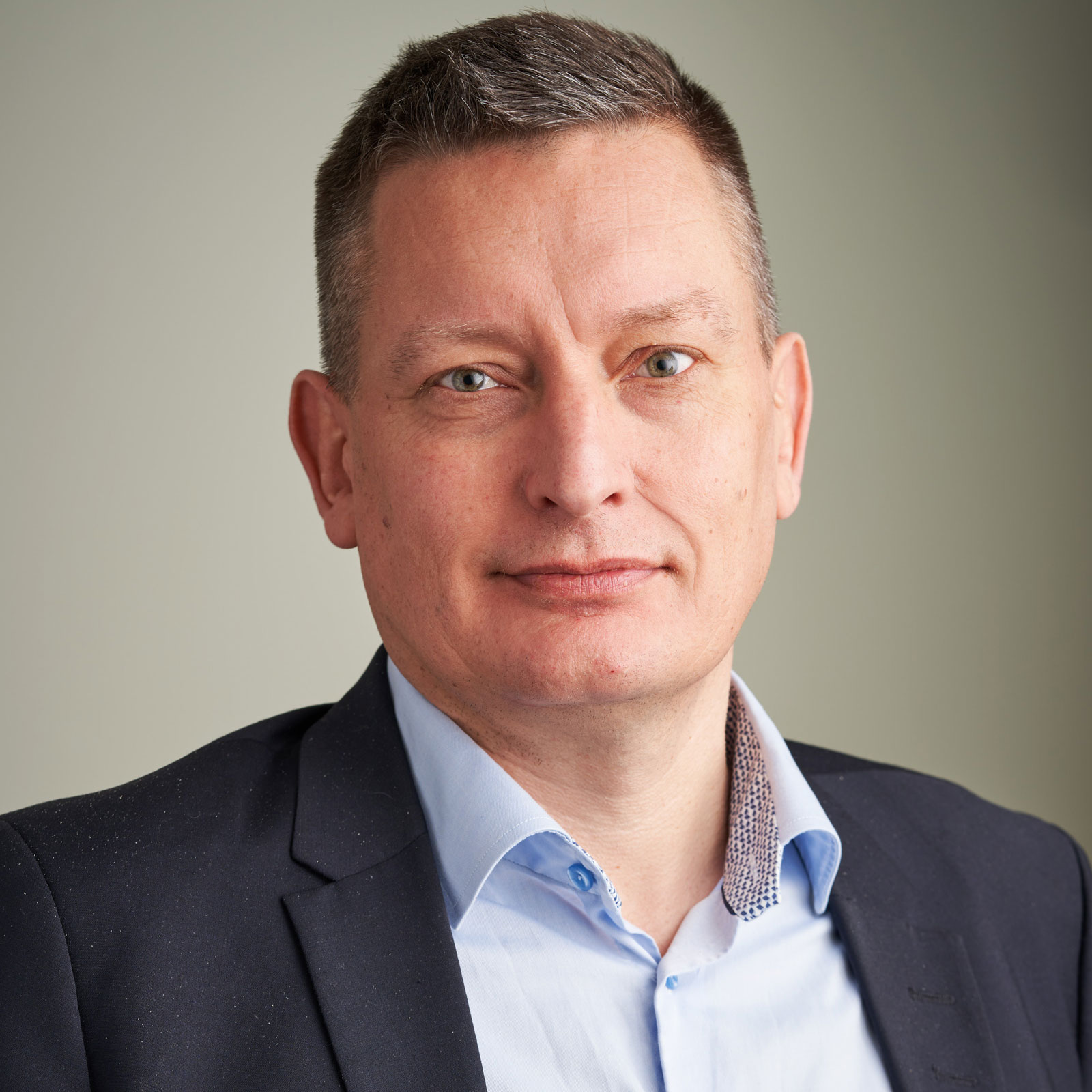
About Matthew Clark
Get in touch
Fill in the form and we will get back to you as soon as possible! Thanks!