Navigating the Tension Between AI Productivity and Cybersecurity
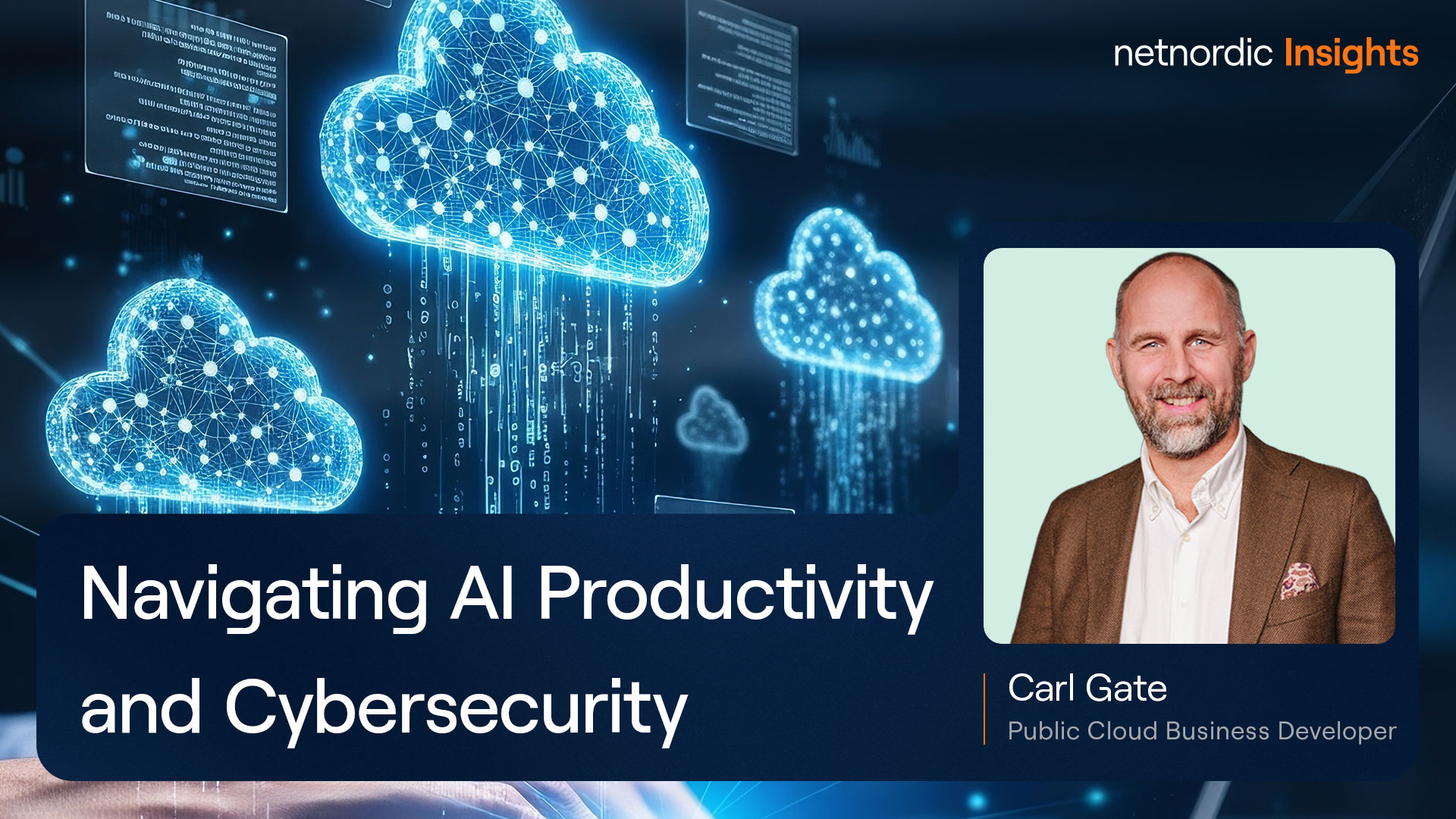
The Strategic Conflict: Productivity vs. Cybersecurity
The rapid integration of Artificial Intelligence into the workplace has created a “perfect storm”. On one side, boards and executives are racing to adopt AI to stay competitive; on the other hand, IT and cybersecurity teams are struggling to contain a new breed of digital risk. As organizations rush to deploy these tools, a fundamental question emerges:
“Can we become more productive without becoming more vulnerable?”
The modern enterprise is currently engaged in a two-hand struggle. One hand reaches for the massive value and efficiency gains offered by AI, while the other hand attempts to lock down data to prevent breaches.
This creates a productivity paradox. Companies often feel the pressure of “keeping up with the neighbors” and as a result, push for rapid AI implementation. When IT departments urge caution, they are often branded as roadblocks to progress. However, when a breach inevitably occurs, the blame often shifts back to IT.
AI as a New Attack Surface
AI has fundamentally changed the “how” of hacking. We are moving away from traditional software exploits towards prompt engineering as a weapon.
If an AI agent is deployed without strict guardrails, it can act as a skeleton key. A clever or curious user – or a malicious actor – can use the chatbot to crawl the organization’s internal network, surfacing sensitive files that were never intended for their eyes.
A major threat also lies in the use of public LLMs. When employees feed sensitive corporate data into a public GPT to summarize a report, for instance, and that model isn’t configured for a private environment, that data can be absorbed into the global model. Eventually, that sensitive information could leak into the results of a competitor’s query without that ever having been the intention. Even when the intent is harmless, the outcome can be damaging.
This is why many organizations are shifting towards private cloud AI deployments or controlled enterprise environments where sensitive data stays protected, auditable, and fully governed.
Without Data Classification, AI Becomes a Risk Multiplier
It’s important to remember that AI is only as good as the data it consumes, and many companies are information hoarders. They maintain decades of legacy data that adds no value but perhaps creates inaccurate or misleading outputs.
For that reason, effective AI deployment requires data classification. Organizations must distinguish between public, general, confidential, and highly confidential data. And prohibit some data from being reachable by AI altogether. Without this classification, it will be impossible to set the necessary safeguards.
Even with technical blocks in place, the screenshot loophole remains: if a user can see sensitive data on an AI interface, they can capture it with a phone camera, bypassing even the most sophisticated digital copy-paste protections.
Infrastructure and Implementation Gaps
The ease of cloud deployment is a double-edged sword. While public cloud platforms allow companies to activate AI tools in minutes, this speed often bypasses necessary cybersecurity audits.
There is a significant gap between buying a tool and implementing it safely. It is technically simple to do, but doing so without a pre-existing tagging structure is an invitation for an instant breach. This is where architecture decisions matter. For some organizations, the benefits of private cloud include tighter control over sensitive workloads, clearer compliance boundaries, and reduced exposure to Shadow AI behavior. For others, the best answer is hybrid cloud, AI keeping critical data and regulated workloads protected, while still leveraging cloud innovation where it makes sense.
The “IT Burden” and the Path Forwards
Currently, there is a massive responsibility gap in most companies. Executives decide to adopt AI, but the burden of data hygiene and cybersecurity falls entirely on the IT department – a department rarely rewarded for cleaning up data but always punished for its loss.
The root of the problem is often a lack of funding and talent. There are very few professionals who truly understand the intersection of AI architecture and cybersecurity together. This leads to Shadow AI, where employees use unauthorized tools behind IT’s back, and work phone policies that blend private and corporate data, leaving the threat factors invisible.
To survive this transition, leadership must realize that information security is not an IT problem; it is a business priority. Success requires:
- Cleaning the Data: Move from hoarding to hygiene.
- Investing in People: Tools are useless without the experts to configure them.
- Data Classification: Clear rules must be established and implemented for the handling of different data types.
- Educational Culture: Users should receive appropriate training on the purpose and function of data labels, including the implications of applying them.
Ultimately, the goal is to bridge the gap between executive ambition and operational reality. By treating data governance as a foundational investment, rather than a technical hurdle, companies can move past the “perfect storm” of risk and towards a future where AI safely delivers on its promise of true organizational efficiency.
Making AI a Competitive Advantage Without Losing Control
AI is reshaping how work gets done, but the organizations that win won’t be the ones who adopt the fastest. The real challenge is not choosing between productivity and cybersecurity, but building the governance, data discipline, and infrastructure that makes both possible at the same time.
That means treating data classification as a business-critical foundation, closing the gap between “turning AI on” and implementing it responsibly, and ensuring IT and cybersecurity teams are empowered, and not blamed to manage the new attack surface AI introduces.
This is where NetNordic can be of service. With deep expertise across cybersecurity, cloud, and network infrastructure, NetNordic helps organizations design and operate secure environments for AI adoption – whether that means strengthening data governance, reducing Shadow AI, improving identity and access controls, or building resilient platforms where sensitive data stays protected. With the right strategy and the right partner, AI becomes a controlled accelerator for innovation – not a shortcut to the next breach.
Navigate the Risks and Maximize the Opportunities
- Clear business objectives
Start with well-defined problems and measurable outcomes so AI is tied directly to business value, not technology for its own sake.
- High‑quality data foundation
Ensuring data is accurate, relevant, secure, and well-governed –AI performance is limited by the quality of the data it learns from.
- Strong change management & skills
Prepare people, not just systems: train users, redefine processes, address adoption, trust, and cultural impact early.
- Strong change management & skills
Build with cybersecurity, ethics, compliance, and scalability in mind so solutions are sustainable and safe as usage grows.


Table of Contents
- The Strategic Conflict: Productivity vs. Cybersecurity
- AI as a New Attack Surface
- Without Data Classification, AI Becomes a Risk Multiplier
- Infrastructure and Implementation Gaps
- The “IT Burden” and the Path Forwards
- Making AI a Competitive Advantage Without Losing Control
- Navigate the Risks and Maximize the Opportunities
Content subjects category
Content type
Related content

Contact Us
Feel free to call us directly on our telephone number +47 67 247 365, send us an email salg@netnordic.no, or fill in the form and we will get back to you as soon as possible! Thanks!